Simulated
Role plays
Traditional role play simulations (face-to-face) have long been a challenge in education, especially when used for assessments. They can be a powerful way for learners to practice skills in a safe space, however, in situations where students are required to be part of the role play, they often struggle to convincingly ‘be the client’. This understandable when assessment require patient interactions that are difficult to replicate (ie: patient with cognitive decline). Also, not all students are comfortable with role play and there can be ethical issues when improvising sensitive scenes.
One way to overcome this challenge is to leverage AI speech recognition and natural language processing. Instead of relying on scripted prompts or peers/teachers pretending to be clients, learners engage in dynamic conversations with virtual characters that can listen, interpret, and respond in real time. This creates a more authentic practice environment where learners can test their communication skills, decision-making, and professional responses without the pressure of a real client watching.
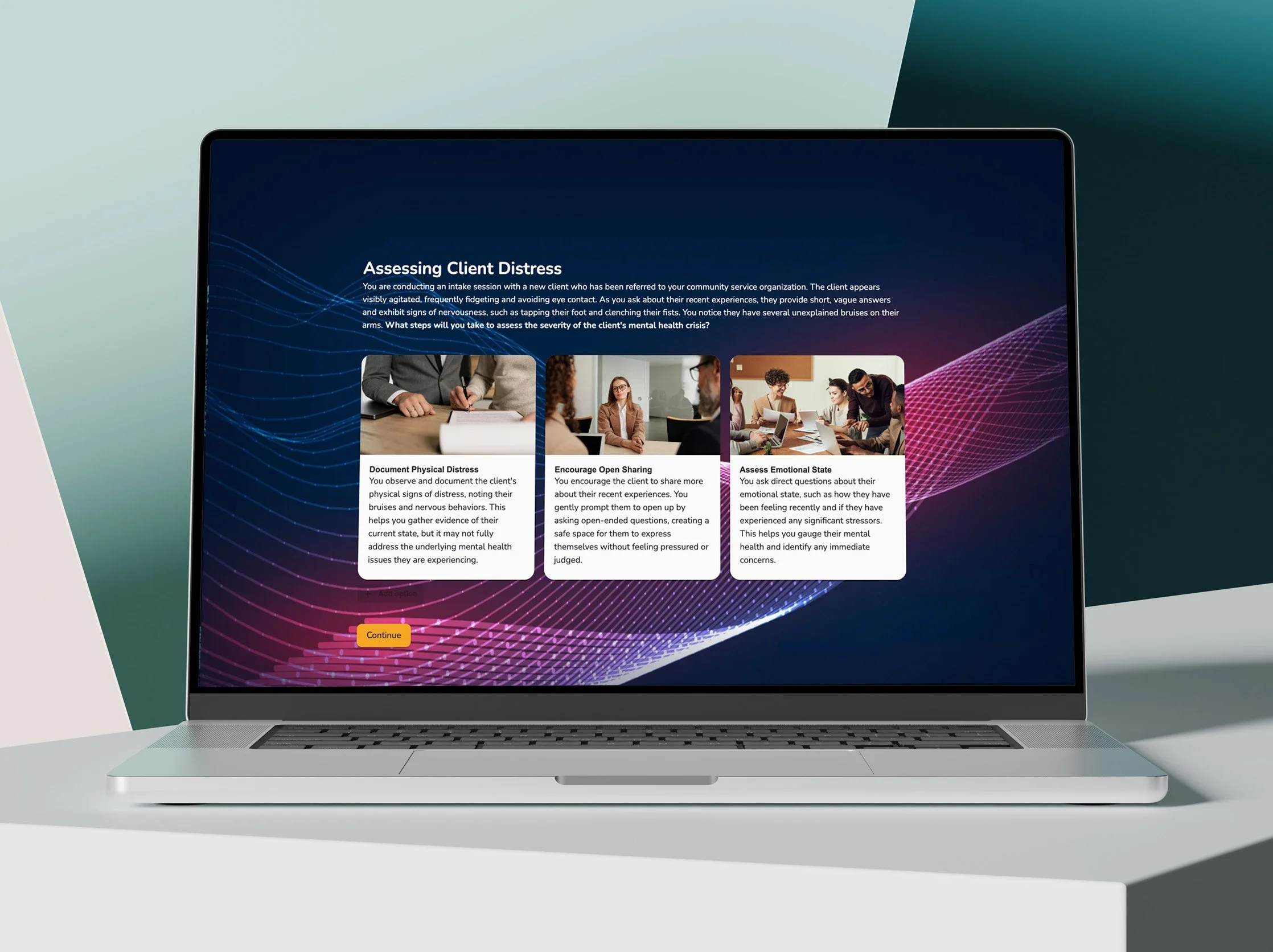
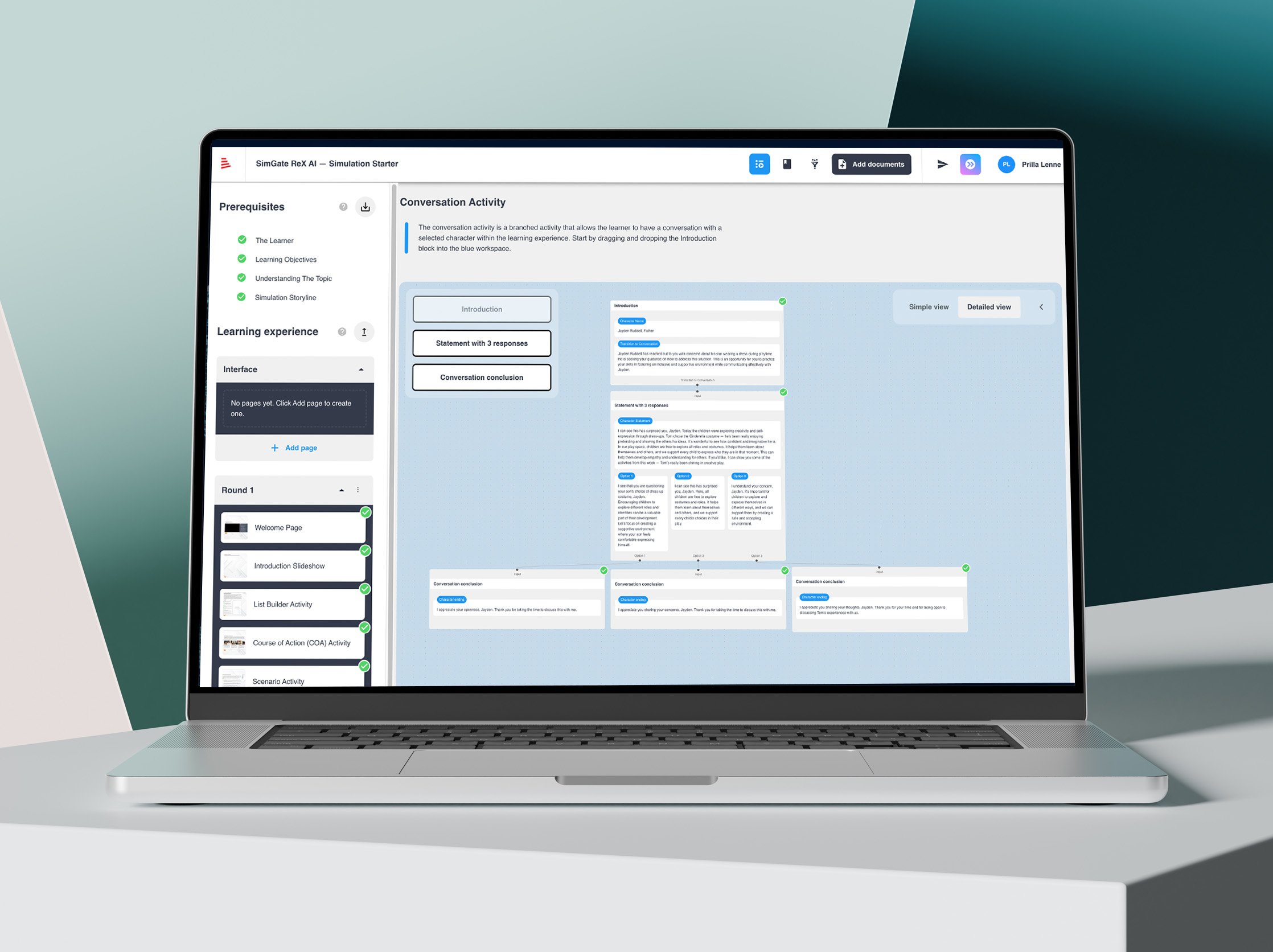
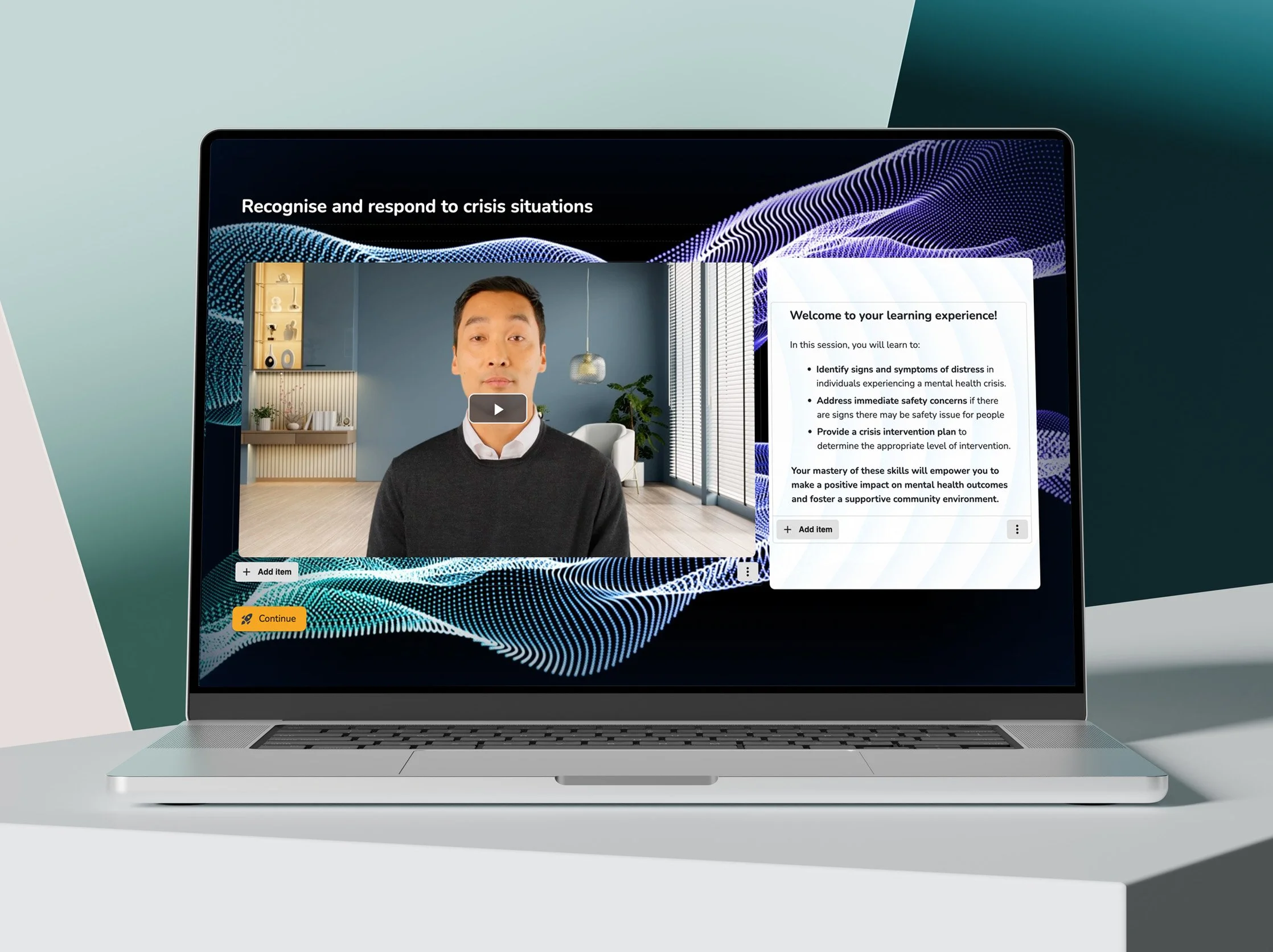
This simulation experience was created in SimGate, a simulation application for learners in a mental health unit (CHCCCS019 Recognise and respond to crisis situations). In designing this simulation, I applied learning design principles grounded in experiential learning and authentic assessment. The branching scenarios align directly with the CHCCCS019 performance criteria, allowing learners to make realistic decisions and see the impact of their actions in a safe environment.